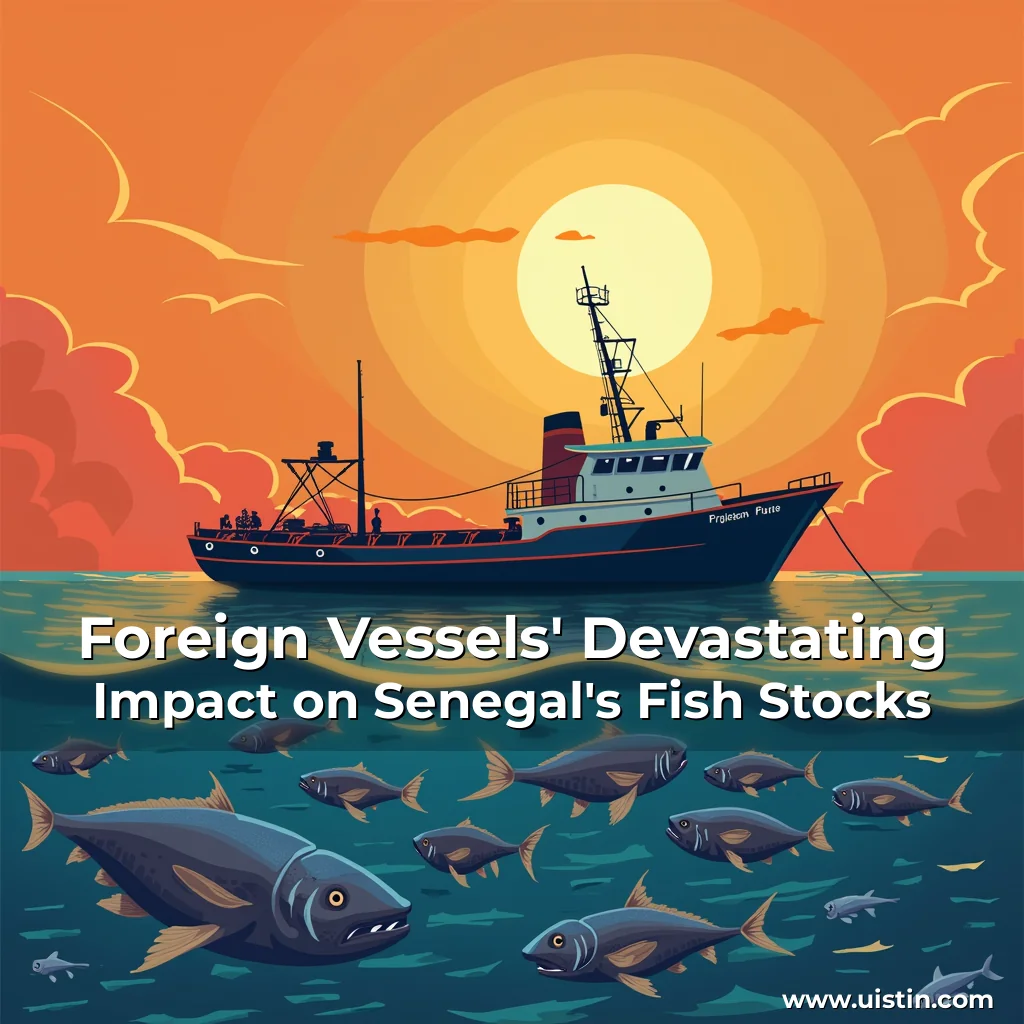
The devastating impact of foreign vessels on Senegal’s fish stocks has sparked a migration crisis, with thousands of Senegalese fishermen and their families fleeing to Spain in search of stability and livelihoods. A recent report by the Environmental Justice Foundation (EJF) highlights the alarming rate at which foreign vessels are overfishing and destroying Senegal’s marine ecosystems, leading to severe economic and social consequences for the country.
- According to the EJF, 57% of Senegal’s fish stocks are in a “state of collapse” due to foreign overfishing and destructive practices.
- The report found that 43.7% of licensed vessels in Senegal are foreign-controlled, predominantly of Spanish and Chinese origin.
- Foreign vessels are using bottom trawling techniques, which drag heavy nets across the seafloor, causing widespread damage to marine ecosystems and depleting fish populations.
The crisis is further exacerbated by the lack of transparency in fishing licenses and inadequate government management of fisheries, which has led to widespread corruption and exploitation of Senegal’s resources. Local fishermen and activists are speaking out against the destructive practices of foreign vessels, calling for stricter regulations and greater accountability. “If I was able to gain enough money in fishing, I would never have come to Europe,” said Memedou Racine Seck, a migrant from Senegal who now lives in Spain.
| Country | Fish Stocks | Foreign Control |
| Senegal | 57% in collapse | 43.7% foreign-controlled |
| Spain | No data available | No data available |
The impact of foreign vessels on Senegal’s fish stocks is not limited to the economic consequences. The decline of fish stocks has also led to a decrease in protein consumption, with Senegalese people consuming less fish per capita. In fact, the report found that consumption per capita has fallen from 29 kilograms to 17.8 kilograms per person.

The report also highlights the need for greater transparency in fishing licenses and improved government management of fisheries. Without these measures, the situation is likely to worsen, and the consequences for Senegal’s fish stocks and the people who depend on them will be severe. “Since the government cannot regulate the boats and we cannot work normally, we choose to run away from the country to come for stability,” said Souleymane Sady, a former fisherman who arrived in Spain in 2020.
Consequences of Foreign Overfishing
- Decline of fish stocks: Foreign vessels are overfishing and destroying Senegal’s marine ecosystems, leading to a decline in fish stocks.
- Lack of transparency in fishing licenses: The lack of transparency in fishing licenses has led to widespread corruption and exploitation of Senegal’s resources.
- Corruption and exploitation: Foreign vessels are using bottom trawling techniques, which cause widespread damage to marine ecosystems and deplete fish populations.
Call to Action
- Stricter regulations on industrial foreign fleets: The EJF is calling for stricter regulations on industrial foreign fleets to prevent further destruction of Senegal’s marine ecosystems.
- Greater transparency in fishing licenses: The EJF is also calling for greater transparency in fishing licenses to prevent corruption and exploitation.
- Improved government management of fisheries: The EJF is calling for improved government management of fisheries to ensure that Senegal’s resources are protected.
Conclusion
The devastating impact of foreign vessels on Senegal’s fish stocks is a pressing issue that requires immediate attention. The EJF’s report highlights the need for stricter regulations, greater transparency, and improved government management of fisheries to prevent further destruction of Senegal’s marine ecosystems. By working together, we can ensure that Senegal’s resources are protected and that the people who depend on them have a brighter future.