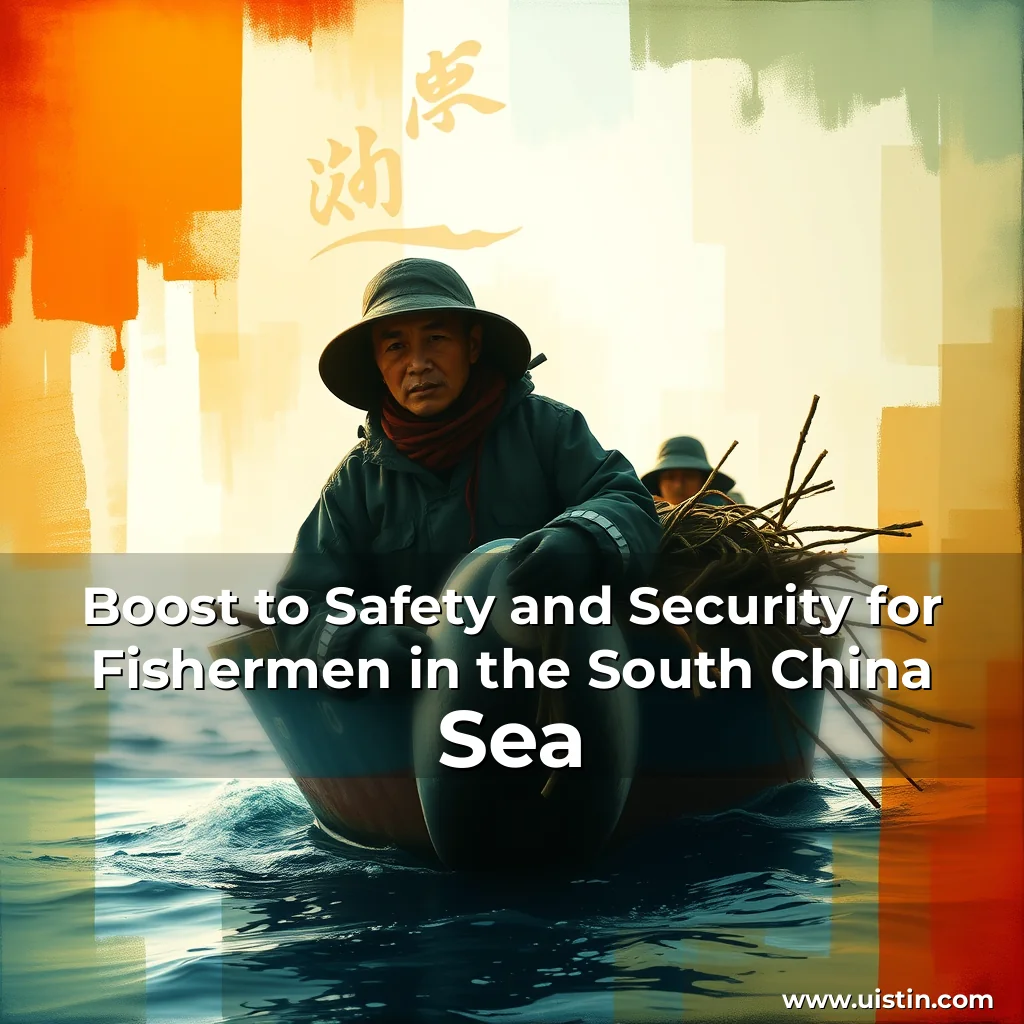
The waters of the South China Sea, which are crucial for China’s economy and food security, have witnessed a significant improvement in safety and security in recent years, thanks to the increased presence of the China Coast Guard (CCG). The veteran fisherman, He Junting, who has been fishing in the South China Sea since he was 13 years old, has witnessed this transformation firsthand. He’s ship is one of over a thousand fishing boats carrying out routine fishing operations every day in the waters near Huangyan Dao, a vast “blue granary” in the South China Sea.
“We have medical staff on our ship,” Ye Yu, one of the law enforcers, told the fishermen who were having lunch on the deck. “You can call us for anything you need. We are here to serve you.”
The CCG has strengthened its patrols in the waters of Huangyan Dao, a step to strengthen marine management in accordance with international law. In November last year, the Chinese government announced the baselines of the territorial sea adjacent to Huangyan Dao, which has helped to clarify the country’s maritime boundaries.
- The CCG’s patrols have also played an important role in cracking down on criminal activities such as maritime smuggling and drug trafficking and maintaining maritime public security.
- He Junting recalled the early years when foreign fishing boats often entered the waters of Huangyan Dao, and some even used extreme fishing methods such as electrofishing and poisoning to seize fishery resources, seriously damaging the marine ecological environment.
The CCG said its routine boarding and inspection of Chinese fishing boats are mainly aimed at regulating fishing operations and cracking down on illegal fishing. The patrols have also improved the lives of fishermen like He Junting, who can now earn a decent living from their fishing operations.
- He Junting has witnessed changes in recent years as the CCG steps up patrols in the waters, which, as he said, has made fishermen like him “feel much safer.”
- Wang Shuxian, captain of another fishing boat that underwent a law enforcement check together with He’s, said that each voyage can now yield about 10 tonnes of seafood, mainly caught through net fishing and diving.
| Country | Fishing Boat Size | Average Seafood Yield |
|---|---|---|
| China | Over 1,000 boats | 10 tonnes |
The improved safety and security in the South China Sea have been attributed to the increased presence of the CCG, which has also helped to reduce the risk of accidents and ensure the livelihoods of fishermen like He Junting and Wang Shuxian. Definition: The South China Sea is a vital waterway for China’s economy and food security, and its management is crucial for the country’s maritime interests.
As the world’s largest fishing nation, China relies heavily on the South China Sea for its seafood supply. The country’s fishing industry is worth billions of dollars, and the South China Sea is home to a vast array of marine resources, including fish, crustaceans, and mollusks.
However, the South China Sea is also vulnerable to overfishing, pollution, and other environmental threats, which have raised concerns among environmentalists and policymakers.
Thanks to the increased presence of the CCG, fishermen like He Junting and Wang Shuxian can now earn a decent living from their fishing operations, and the risk of accidents and environmental degradation has been reduced.
The CCG’s patrols have also helped to regulate fishing operations and prevent illegal fishing, which has improved the overall sustainability of the fishing industry in the South China Sea.
Reducing the Risk of Accidents and Environmental Degradation
The improved safety and security in the South China Sea have been attributed to the increased presence of the CCG, which has also helped to reduce the risk of accidents and ensure the livelihoods of fishermen like He Junting and Wang Shuxian. The CCG’s patrols have also helped to regulate fishing operations and prevent illegal fishing, which has improved the overall sustainability of the fishing industry in the South China Sea. The patrols have also played an important role in maintaining maritime public security and preventing criminal activities such as maritime smuggling and drug trafficking. Highlight: The CCG’s patrols have improved the lives of fishermen like He Junting and Wang Shuxian, who can now earn a decent living from their fishing operations. Definition: Maritime smuggling refers to the smuggling of goods across national borders by sea.
The CCG’s efforts have helped to reduce the risk of accidents and environmental degradation, and have improved the overall sustainability of the fishing industry in the South China Sea.
As the world’s largest fishing nation, China relies heavily on the South China Sea for its seafood supply, and its management is crucial for the country’s maritime interests.
Conclusion
The improved safety and security in the South China Sea have been attributed to the increased presence of the CCG, which has also helped to reduce the risk of accidents and ensure the livelihoods of fishermen like He Junting and Wang Shuxian. The CCG’s patrols have improved the lives of fishermen, who can now earn a decent living from their fishing operations, and have reduced the risk of accidents and environmental degradation. The improved safety and security in the South China Sea have been attributed to the increased presence of the CCG, which has helped to regulate fishing operations and prevent illegal fishing, and has improved the overall sustainability of the fishing industry in the South China Sea. The CCG’s patrols have also played an important role in maintaining maritime public security and preventing criminal activities such as maritime smuggling and drug trafficking. As the world’s largest fishing nation, China relies heavily on the South China Sea for its seafood supply, and its management is crucial for the country’s maritime interests. The CCG’s efforts have helped to reduce the risk of accidents and environmental degradation, and have improved the overall sustainability of the fishing industry in the South China Sea.