
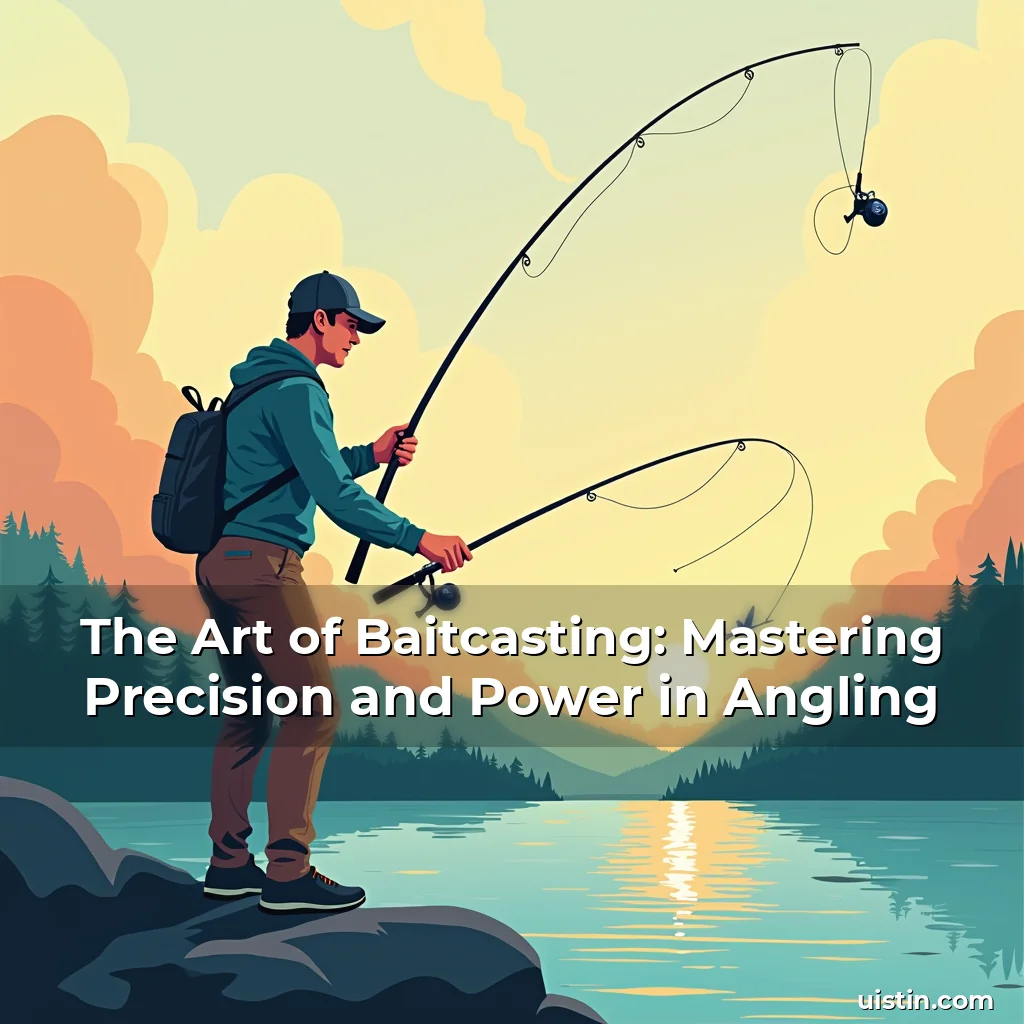
The Art of Baitcasting: Mastering Precision and Power in Angling
Baitcasting is an angler’s art form that blends technical skill with deep understanding of aquatic ecosystems. It stands apart from other fishing techniques by allowing precise control over lure placement, making it ideal for targeting fish in complex environments.
This method requires mastering the delicate balance between casting distance and accuracy, which can mean the difference between success and failure when pursuing species like bass, pike, or muskie.
Understanding the Mechanics of Baitcasting Reels
A baitcaster operates through a system where the spool rotates independently of the handle cranking motion. This design allows anglers to cast lures with greater precision than spinning reels but demands careful handling to avoid tangles.
The key components include the spool brake mechanism, gear ratio, and line capacity. These elements work together to determine how far and accurately you can cast your lure.
- Spool Brake Mechanism: Modern baitcasters feature magnetic brakes that prevent backlash during casts, offering variable settings based on line weight and casting conditions.
- Gear Ratio: Higher ratios provide faster retrieves but may reduce casting distance, while lower ratios offer more power for heavy cover fishing scenarios.
Selecting the right reel involves considering factors such as target species size, water type (freshwater vs saltwater), and personal preference regarding retrieve speed versus casting range.
Reel manufacturers often categorize their models based on these specifications, helping buyers make informed decisions tailored to their specific needs.
Fundamentals of Proper Casting Technique
Casting technique forms the backbone of successful baitcasting. A smooth, controlled release of the thumb off the spool combined with a firm wrist snap determines both distance and accuracy.
Beginners often struggle with backlashes due to improper timing between releasing tension and initiating forward momentum. Practicing at low heights initially helps develop muscle memory without risking tangled lines.
Maintaining consistent posture—feet shoulder-width apart, body slightly leaning backward—is crucial for maximizing casting efficiency and minimizing strain injuries.
Mastering the double-haul technique enhances casting performance by adding extra power behind each throw, particularly useful when fishing from shorelines or docks.
Troubleshooting Common Issues
Despite its advantages, baitcasting presents several challenges that require troubleshooting skills. The most common issue faced by novice anglers is backlash caused by incorrect spool speed relative to line movement.
To mitigate this problem, adjusting the spool brake setting according to line diameter becomes essential. Thicker lines typically demand higher brake resistance compared to thinner monofilament options.
Regular maintenance routines including cleaning internal gears and checking for worn-out parts ensure optimal functionality across different weather conditions and fishing locations.
When experiencing difficulty achieving desired casting distances, reviewing gear ratio choices alongside practice sessions might reveal opportunities for improvement.
Choosing the Right Lure for Your Target Species
Lure selection significantly influences baitcasting effectiveness. Matching lure action with prey behavior increases chances of triggering strikes from wary fish populations.
Hard-bodied baits excel in clear waters where visibility plays a role in predator decision-making processes. Conversely, soft plastics become invaluable tools under murky conditions masking natural movements effectively.
Varying retrieval speeds mimics injured prey patterns successfully attracting attention from nearby predators regardless of environmental clarity levels.
Experimentation remains vital; what works well against one species might prove ineffective against another requiring constant adaptation strategies.
Advanced Techniques for Enhanced Performance
Experienced anglers employ advanced tactics to extract maximum potential from their baitcasting setups. One popular approach involves using jerkbaits designed specifically for creating erratic motions imitating wounded minnows.
These specialized lures generate unpredictable darting behaviors stimulating aggressive responses from predatory fish species commonly found near structures or drop-offs.
Combining topwater presentations with subsurface approaches creates layered pressure points increasing overall catch rates especially during transitional periods between day and night cycles.
Incorporating live bait rigs equipped with high-quality hooks ensures reliable hookups even amidst challenging underwater obstacles present within targeted habitats.
Environmental Considerations When Baitcasting
Anglers must remain mindful of ecological impacts associated with their chosen methods. Selective harvesting practices help preserve healthy population dynamics among native aquatic lifeforms.
Using biodegradable tackle reduces long-term damage inflicted upon marine environments affected by lost equipment over time frames exceeding human lifespans.
Respecting local regulations governing protected areas maintains sustainable fisheries capable of supporting future generations seeking recreational experiences similar to those enjoyed today.
Prioritizing non-toxic materials whenever possible minimizes chemical exposure risks threatening delicate food chains sustaining diverse wildlife communities.
Community Insights and Personal Experiences
Engaging with fellow enthusiasts provides access to insider knowledge unavailable elsewhere. Online forums serve as hubs connecting individuals worldwide sharing successes encountered through shared experiences.
Local clubs organize regular events promoting camaraderie centered around mutual interests strengthening bonds formed beyond mere competition aspects inherent within sportfishing culture.
Documenting personal achievements contributes positively towards collective wisdom benefiting newcomers aiming to elevate their proficiency rapidly without unnecessary trial-and-error phases.
Sharing stories about memorable catches reinforces appreciation cultivated toward nature’s wonders while simultaneously educating others about responsible angling principles.
Conclusion
Baitcasting represents much more than simply throwing out a lure—it embodies centuries-old traditions refined continuously through modern technological advancements shaping contemporary angling landscapes globally.
By embracing fundamental teachings coupled with innovative applications emerging regularly within this dynamic field, every enthusiast holds immense potential waiting to be unlocked through persistent dedication displayed daily along riverbanks and lake shores alike.